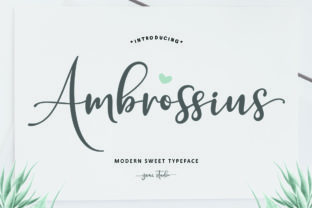
Ambrossius Script: Handwritten Charm, Modern Impact
Imagine a font that feels like it was sketched by a skilled hand—fluid, expressive, and full of personality—yet engineered for real-world use. That’s Ambrossius Script: a classic crafting font grounded in authentic handwriting, refined with subtle consistency, and designed to stand out without shouting. It’s not just decorative; it’s functional elegance. Whether you’re drafting an invitation, designing a product label, or building a brand identity, Ambrossius Script bridges warmth and professionalism in ways many script fonts can’t.
Why This Handwritten Font Fits Real Creative Work
Most script fonts fall into one of two traps: they’re either too rigid (losing the organic flow of real penmanship) or too erratic (making extended text hard to read or align). Ambrossius Script avoids both. Its letterforms balance irregularity—slight variations in stroke weight, natural entry/exit swashes, and gentle baseline undulation—with thoughtful spacing and consistent x-height. The result? Text that breathes and feels human, but remains legible at 14–16pt for short headlines, quotes, or callouts.
This makes it especially useful where authenticity matters: handmade soap labels, indie book covers, workshop flyers, or educator newsletters. A teacher creating a classroom welcome banner doesn’t need sterile uniformity—they need something that says “I made this with care.” Ambrossius Script delivers that tone instantly, without requiring illustration skills or custom lettering.
Where It Shines—and Where to Pause
Ambrossius Script excels in contexts where attention is brief and emotional resonance is key. Consider these practical uses:
- Small-batch product packaging: Its friendly, artisanal character helps craft beverages, candles, or baked goods feel personal and trustworthy—not mass-produced.
- Digital course sales pages: A headline set in Ambrossius Script over a clean sans-serif body font creates visual hierarchy while conveying approachability—ideal for educators or coaches targeting adult learners.
- Wedding stationery suites: Paired with a neutral serif or geometric sans, it adds intimacy without sacrificing sophistication—especially effective for names, dates, or short poetic lines.
- Social media graphics for makers: Instagram story text overlays or Pinterest pins gain instant visual distinction when using Ambrossius Script for key phrases like “Hand-poured,” “Locally Grown,” or “Limited Edition.”
That said, Ambrossius Script isn’t built for long paragraphs or dense UI interfaces. Its charm lies in brevity and intention. If you’re designing a multi-page brochure or a SaaS dashboard, lean on it for headings, pull quotes, or accent text—not body copy. It also performs best at medium to large sizes (20pt+ on print, 36px+ on screen); smaller applications may lose its nuance.
Designing With Intention, Not Just Aesthetics
Using Ambrossius Script well means thinking beyond “it looks nice.” It’s about reinforcing message and audience alignment. For example, a freelance graphic designer pitching to boutique studios might include a mockup featuring Ambrossius Script in a mood board—subtly signaling their fluency in tactile, detail-oriented aesthetics. A small bakery owner updating their website could replace generic header text with Ambrossius Script for their tagline (“Fresh Daily Since 2015”)—instantly elevating perceived craftsmanship.
Pairing matters. Ambrossius Script works gracefully with restrained typefaces: think Inter, Public Sans, or IBM Plex Serif. Avoid competing scripts or overly ornate serifs—the goal is contrast, not clutter. Try setting Ambrossius Script in title case with generous letter-spacing (50–100 units in design apps) to let each glyph breathe. For digital use, always test rendering across devices: some browsers slightly compress thin strokes, so preview on iOS Safari and Android Chrome before finalizing.
Who Benefits Most—and Why
Creatives who juggle multiple roles often find Ambrossius Script most valuable. Freelance marketers crafting email headers, bloggers designing opt-in graphics, or educators preparing printable resources all need tools that save time *and* deepen connection. Ambrossius Script reduces the need for custom hand-lettering—cutting hours off projects—while still delivering unique voice.
Small business owners without in-house designers benefit particularly. Instead of licensing expensive display fonts or hiring for one-off jobs, they get a versatile, high-quality script that scales across platforms: Canva templates, Shopify theme editors, Adobe Express, and even Google Docs (via add-ons). One purchase supports consistent branding across social bios, printed menus, and digital ads—no rebranding fatigue.
Hobbyists and makers also respond strongly to its accessibility. You don’t need typography training to use Ambrossius Script effectively. Its OpenType features—including contextual alternates and ligatures—are intuitive: enable them once, and the font smartly swaps glyphs to avoid awkward collisions (like “st” or “fl” combinations). That subtle polish happens automatically, not manually.
A Note on Fit and Alternatives
Like any tool, Ambrossius Script serves best when matched to purpose—not prestige. If your project demands ultra-modern minimalism (e.g., a tech startup’s investor deck), a tight, monoline script may suit better. If historical accuracy is essential—say, recreating 18th-century broadsides—then a more period-specific calligraphic font would be appropriate.
Also consider audience expectations. A law firm’s holiday card might feel incongruous in Ambrossius Script unless carefully balanced with strong, traditional elements elsewhere. Context shapes perception: what reads as warm and inviting in a pottery studio’s Instagram bio may read as unserious in a financial advisor’s report cover.
That’s why testing matters. Try Ambrossius Script alongside two alternatives—one simpler (e.g., a clean brush script), one more elaborate (e.g., a flourished copperplate)—in your actual layout. Print them. View them on mobile. Ask a colleague unfamiliar with the project which version best conveys “thoughtful, skilled, and human.” Often, the answer points straight to Ambrossius Script’s sweet spot: distinctive enough to be memorable, grounded enough to be credible.
Final Thought: Typography as Quiet Advocacy
In a world saturated with algorithm-driven templates and AI-generated visuals, choosing a font like Ambrossius Script is a small but meaningful act of intention. It signals care—not just for aesthetics, but for how words land, how brands are felt, and how people connect through design. It won’t replace strategy or content. But when used thoughtfully, it helps those things resonate deeper, linger longer, and stand apart—without needing explanation.
So whether you're launching a side hustle, refreshing a classroom wall, or prepping your next Etsy listing: give Ambrossius Script space to do what it does best—not imitate handwriting, but embody its spirit: confident, considered, and quietly unforgettable.