Saturdayy: Crisp Elegance in Handwritten Typography
If you’ve ever scrolled through a travel blog and paused at a headline that felt both effortless and intentional—if you’ve admired a boutique outdoor brand’s logo for its quiet confidence—chances are, you responded to the subtle power of thoughtful typography. Saturdayy is that kind of typeface: a modern handwritten font designed not just to look hand-drawn, but to feel purposeful, clear, and refreshingly light.
What Makes Saturdayy Stand Out
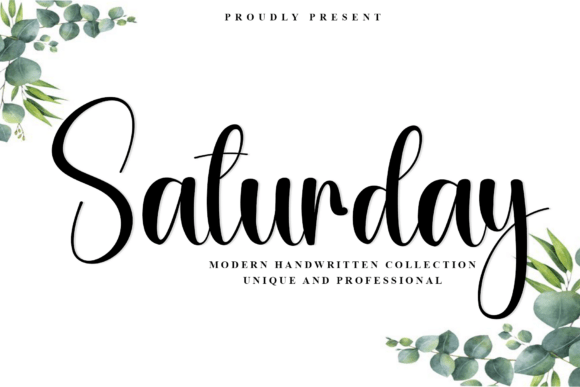
Unlike many script fonts that lean heavily into flourishes or casual looseness, Saturdayy balances personality with precision. Its tall, thin strokes give it vertical lift and visual airiness, while its gentle, consistent slant adds rhythm—not randomness. Think of it as handwriting refined by intention: the kind you’d use on a postcard from a mountain trail or sketch in a well-worn notebook before launching a new project.
This isn’t “handwritten” as in hurried or improvised. It’s handwritten as in human-centered—designed for legibility at small sizes, harmony in pairing, and emotional resonance without distraction. That crisp elegance comes from restraint: no excessive connectors, no competing weights, no forced quirkiness. Just clean lines, balanced spacing, and a quiet sense of calm.
Where Saturdayy Fits Naturally
Because it’s approachable yet polished, Saturdayy works especially well where authenticity meets professionalism. Here’s how real people use it:
- Travel photographers use it for photo captions, portfolio titles, and print-on-demand postcards—its lightness complements natural imagery without competing for attention.
- Outdoor gear brands choose it for logo submarks, packaging tags, and website headlines—evoking openness, movement, and grounded confidence.
- Web designers pair it with neutral sans-serifs (like Inter or Lato) for hero sections, testimonials, or newsletter headers—adding warmth without sacrificing readability on any device.
- Educators and creators apply it to workshop handouts, course landing pages, or Instagram story highlights—making information feel inviting, not intimidating.
You don’t need design experience to benefit from Saturdayy. A freelance writer might use it for a personal bio section on their site. A small-batch candle maker could set their “Mountain Air” scent name in Saturdayy on a label—letting the name breathe alongside the font. Even a teacher preparing a nature-themed classroom bulletin board finds it easy to scale and print clearly.
Why It Solves Real Creative Needs
Many people struggle with fonts that either feel too stiff (like corporate sans-serifs) or too chaotic (overly decorative scripts). Saturdayy bridges that gap—it carries warmth and individuality while maintaining structure and clarity. That makes it especially helpful when:
- You want your brand voice to feel human—but not unpolished.
- You’re designing for screens where readability matters more than ornamentation.
- You’re balancing multiple visual elements (photos, icons, text) and need typography that supports, not dominates.
- You’re building something long-term—like a website or product line—and want a typeface that ages gracefully, not trendily.
It’s also highly versatile across formats. Whether embedded in a WordPress theme, used in Canva for social posts, or exported as SVG for laser-cut signage, Saturdayy retains its character. Its OpenType features include standard ligatures and alternate characters—subtle touches that add polish without complexity.
Practical Considerations Before You Use It
Like any tool, Saturdayy shines brightest when matched to the right context. Keep these points in mind:
Legibility at smaller sizes
While highly readable in headings and medium-sized body text (16–24px), avoid using it for long paragraphs under 14px or dense interface labels. Its elegance lives in breathing room—not tight constraints.
Pairing matters
It pairs beautifully with clean, geometric sans-serifs (think Montserrat or Poppins) or warm, low-contrast serifs (like Cormorant Garamond). Avoid pairing it with other high-contrast scripts or overly decorative fonts—they’ll compete rather than complement.
Licensing is straightforward—but check your use case
Saturdayy is available under standard desktop, web, and app licenses. If you're using it in client work, confirm whether your license covers commercial redistribution (e.g., in a template you sell). Most users find the licensing clear and fair—no surprises, no hidden tiers.
It’s not meant to mimic handwriting perfectly
If you need ultra-realistic pen texture, variable pressure, or ink bleed effects, Saturdayy won’t deliver that. Its strength is in its refined consistency—not raw imperfection. That’s intentional. It’s designed for clarity first, charm second.
A Font That Grows With Your Work
What makes Saturdayy especially valuable over time is how it adapts—not by changing, but by staying reliably itself. A blogger who starts with a simple portfolio site can keep using Saturdayy as their audience grows and their design evolves. A startup founder launching hiking apparel can use the same font for their first Instagram post and later for retail packaging, trade show banners, and investor decks—without needing to “rebrand” the type.
That consistency builds recognition. And because it avoids fleeting trends—no exaggerated swashes, no forced nostalgia—it feels current today and likely will in five years. It’s typography with quiet confidence: professional enough for clients, personable enough for followers, elegant enough to last.
Whether you’re choosing your first font for a personal project or refining a brand system you’ve nurtured for years, Saturdayy offers something rare: a handwritten aesthetic that doesn’t ask you to sacrifice clarity for charm—or professionalism for personality.