Calya: Handwritten Elegance, Engineered for Clarity
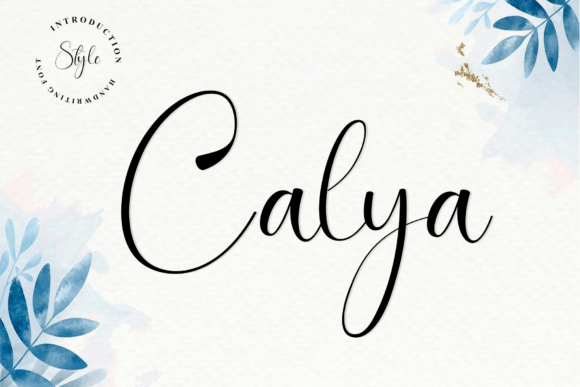
Typography isn’t just about legibility—it’s about resonance. In a digital landscape saturated with uniform sans-serifs and over-polished display fonts, Calya arrives with quiet intention. It’s not another decorative script meant for fleeting social posts. Calya is a “unique and professional” entry into the modern handwritten collection—designed not to mimic casual penmanship, but to distill clarity and crisp elegance into every stroke.
What sets Calya apart begins with structure: tall, thin strokes that breathe without collapsing; a subtle, airy slant—not dramatic or forced, but gently forward-leaning, like light catching the edge of a ridge at dawn. This isn’t handwriting as improvisation. It’s handwriting as considered craft—refined, intentional, and consistently legible even at smaller sizes. The result feels as fresh as a mountain breeze: clean enough for interface text, expressive enough for storytelling headers, and warm enough to invite attention without demanding it.
Why Handwritten Fonts Are No Longer Just for Invitations
A decade ago, handwritten typefaces were largely relegated to wedding stationery, café chalkboards, or playful blog headers. Today, they’ve evolved alongside shifting user expectations and creative workflows. People don’t just want authenticity—they want *intentional* authenticity. They’re fatigued by algorithmic sameness, yet wary of gimmicks. That’s where Calya fits: not as nostalgic ornamentation, but as a functional voice—one that signals human care without sacrificing polish.
This shift reflects broader habits. Consumers increasingly associate visual tone with brand integrity—especially in lifestyle, outdoor, and wellness spaces. A travel photographer doesn’t choose a font to “look artsy”; they choose one that quietly reinforces the feeling of discovery, stillness, or openness in their work. Similarly, an educator launching an online course on mindful hiking doesn’t need sterile neutrality—they need typography that aligns with calm focus and grounded presence. Calya meets that need precisely because it avoids both cold detachment and cloying whimsy.
From Print-First to Context-Aware: How Calya Fits Modern Workflows
Designers and developers no longer treat fonts as static assets. With variable font technology, responsive layouts, and cross-platform publishing, type must perform across contexts—light mode and dark, mobile screens and print brochures, CMS editors and code-based frameworks. Calya was built with this reality in mind. Its tall x-height and open counters improve readability on small devices, while its restrained contrast ensures it renders cleanly on low-DPI screens and high-resolution displays alike.
For freelancers building client websites, Calya offers versatility without compromise. Pair it with a neutral sans-serif like Inter or Manrope for body copy, and you gain hierarchy without visual noise. Use it for section headers, quote pulls, or call-to-action buttons—and it communicates approachability and authority in equal measure. Unlike many handwritten fonts that break down at 14px or distort under CSS transforms, Calya maintains its integrity through real-world usage patterns.
Where Calya Finds Its Strongest Footing (and Why)
Three use cases consistently reveal Calya’s strategic value—not because they’re trendy, but because they reflect durable human priorities: connection, experience, and trust.
- Travel Photography & Visual Storytelling: Calya’s airy slant echoes motion and perspective—the slight tilt of a horizon line, the lean of a trail marker into wind. When layered over landscape imagery, it doesn’t compete; it complements. A caption set in Calya feels like a quiet observation, not a loud caption. Photographers using Calya in portfolio sites or limited-edition zines report stronger emotional retention from viewers—particularly among audiences aged 30–45 who prioritize meaning over metrics.
- Outdoor and Sustainable Branding: Brands selling gear, apparel, or experiences rooted in nature face a delicate balance: they must convey durability and function without sounding corporate, and warmth without seeming naive. Calya bridges that gap. Its thin strokes suggest lightness and mobility; its clarity signals reliability. A backpack brand using Calya for product names and trail journal excerpts communicates thoughtful design—not just ruggedness.
- Sophisticated Web Design for Service-Based Professionals: Therapists, educators, consultants, and coaches often struggle to differentiate themselves visually in crowded digital spaces. Calya provides distinction without alienation. It reads as human-centered but never unprofessional—ideal for hero sections, testimonial highlights, or email signature blocks. One freelance UX researcher noted that clients described her site as “calm but confident”—a direct reflection of Calya’s tonal precision.
Evolving Expectations, Not Just Aesthetics
The rise of Calya isn’t about chasing a trend—it’s about responding to deeper shifts in how people engage with digital content. Attention spans haven’t just shortened; they’ve become more selective. Users scroll past anything that feels generic, transactional, or emotionally dissonant. At the same time, tools like Figma, Webflow, and Canva have democratized design—meaning more non-designers are making typographic choices. That increases demand for fonts that are both expressive and forgiving: ones that look intentional even when used by someone without formal training.
Calya answers that need. Its letterforms avoid extreme flourishes or idiosyncratic alternates that require manual tweaking. It includes carefully balanced punctuation, consistent spacing, and OpenType features optimized for web use—not just desktop apps. That practicality makes it accessible to bloggers embedding quotes in Medium posts, small business owners updating Shopify banners, or educators designing printable mindfulness worksheets.
Choosing Calya Is a Design Decision—Not Just a Style Choice
Adopting Calya signals something specific: that clarity matters more than complexity, and elegance shouldn’t require distance. It’s not a font for brands trying to appear “cool” or “edgy.” It’s for those committed to resonance over reach—whether that’s a solo creator documenting coastal walks, a nonprofit sharing conservation stories, or a boutique studio crafting identity systems for purpose-driven startups.
In practice, that means resisting the urge to overuse it. Calya shines most when given room—paired with generous line height, ample white space, and thoughtful color contrast. It works best at sizes 24px and up for headings, and remains legible down to 16px for short labels or captions. Avoid cramming it into dense navigation bars or tiny CTAs; let it breathe, and it rewards with nuance.
One designer shared how switching from a popular script font to Calya improved bounce rates on a client’s outdoor retreat website by 12% over six weeks—not because the font “converted better,” but because visitors reported feeling “more settled” upon landing. That’s the understated power of typographic intention: it doesn’t shout. It invites.
A Font That Grows With You
Calya doesn’t promise transformation. It offers consistency—a reliable tool that adapts as your work evolves. A blogger may start with Calya for newsletter headers, then expand to custom illustrations using its stroke rhythm as visual reference. A startup founder might begin with Calya in pitch decks, then extend it into packaging, signage, and video subtitles—all while preserving recognizability and tone.
That scalability isn’t accidental. It’s built into Calya’s DNA: the balance between personality and precision, warmth and restraint, uniqueness and usability. In a field where fonts often age quickly—either fading into background noise or feeling dated within months—Calya’s grounded elegance gives it staying power. It doesn’t try to be everything. It does one thing exceptionally well: help ideas land with quiet confidence.