Ryoma: A Friendly Handwritten Font
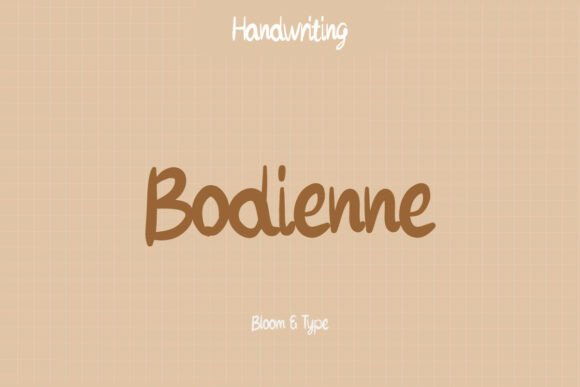
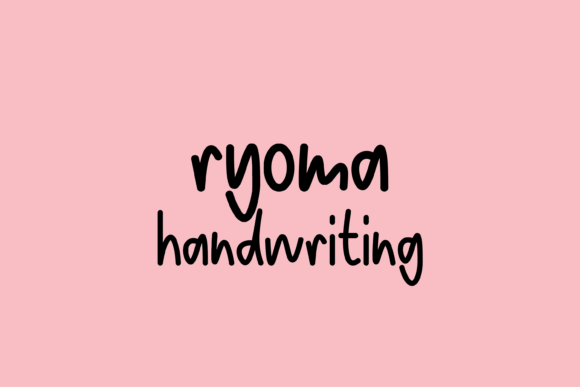
Ryoma isn’t just another script font—it’s a quiet invitation to soften your design language without sacrificing clarity. Designed with genuine handwriting rhythm in mind, Ryoma balances simplicity and personality. Its lowercase letters flow with gentle variation—no rigid uniformity, no forced flourishes—just confident, approachable strokes that feel human-made, not algorithmically smoothed.
What makes Ryoma stand out isn’t complexity, but consistency in warmth. The spacing is open enough for readability at small sizes; the x-height is generous, so it holds up well in body text for invitations or editorial layouts. And unlike many handwritten fonts that lean heavily into cursive swirls or exaggerated swashes, Ryoma keeps its quirks subtle—a slightly tilted ‘a’, a rounded ‘g’, a soft terminal on the ‘y’. These details add character without demanding attention.
Where Ryoma Fits Naturally
Ryoma thrives where authenticity matters more than formality. Think of it as the typeface you’d choose when you want your audience to feel like they’re receiving a note from someone who cares—not a broadcast, but a conversation.
- Wedding stationery: Use Ryoma for names, dates, and short poetic lines on save-the-dates or ceremony programs. Pair it with a clean sans-serif (like Inter or Lato) for addresses and logistics—this contrast creates visual hierarchy while keeping the tone personal and warm.
- Small business branding: Cafés, independent bookshops, craft studios, and wellness practitioners often benefit from typography that feels grounded and sincere. Ryoma works beautifully in logos or wordmarks—especially when paired with minimal iconography or hand-drawn elements.
- Digital content: Blog headers, Instagram quote graphics, or email newsletter banners gain instant approachability with Ryoma. Just avoid using it for long paragraphs online—stick to headlines, pull quotes, or short callouts where its voice shines most.
- Educational materials: Teachers and course creators use Ryoma to label worksheets, highlight learning goals, or introduce reflection prompts. Its friendliness lowers cognitive load, especially for younger learners or neurodiverse audiences.
Designing With Intention—Not Just Decoration
Using Ryoma effectively means treating it as a tool—not a trend. That starts with understanding its limits. It’s not built for dense legal text, multilingual typesetting with complex diacritics, or ultra-narrow columns. But within its sweet spot? It delivers clarity *and* charm.
For designers: Test Ryoma at multiple sizes early. You’ll find it reads cleanly down to 14pt in print and 18px on screen—but below that, letterforms begin to merge. If you need smaller text, switch to a supporting typeface and reserve Ryoma for emphasis only.
For marketers and entrepreneurs: Consider your audience’s expectations before choosing Ryoma. A fintech startup targeting enterprise clients might opt for something more restrained—but a local pottery studio launching a new workshop series? Ryoma instantly signals craft, care, and accessibility.
For educators and content creators: Try pairing Ryoma with a neutral, highly legible body font (like Source Sans Pro or Noto Serif). This combo gives structure to your layout while letting Ryoma carry emotional weight—like introducing a key concept or framing a student reflection.
Practical Tips for Real Projects
Here’s what works—and what doesn’t—based on real usage across dozens of client and personal projects:
- Print first, then adapt: Ryoma was drawn with ink and paper in mind. If your project begins in print (invitations, posters, packaging), start there—then scale back carefully for digital use. Avoid stretching or skewing the font to “fit” a layout; let its natural proportions guide your margins and line lengths.
- Limit color contrast: For maximum readability, stick to high-contrast pairings—black or deep charcoal on white or cream stock. Soft pastels or low-contrast combinations (like light gray on off-white) mute Ryoma’s expressive details.
- Embrace whitespace: Because Ryoma has visual texture, it needs room to breathe. Increase line height by 1.4–1.6x in paragraph settings. In logos or monograms, give surrounding space equal importance to the letterforms themselves.
- Test with real people: Before finalizing a wedding suite or product label, show a printed sample to two or three people outside your immediate circle. Ask: “Does this feel welcoming? Does anything look awkward or hard to read?” Their unfiltered feedback is more valuable than any style guide.
Variations and Creative Flexibility
Ryoma comes in a single weight—intentionally. Its strength lies in restraint, not range. That doesn’t mean it lacks flexibility. Instead, its versatility emerges through smart application:
- Use all caps sparingly—for emphasis, not full sentences—to highlight a brand tagline or event title.
- Combine uppercase and lowercase thoughtfully: “Ryoma Studio” works because the capital R anchors the name, while the rest flows naturally.
- Add subtle texture overlays (like faint paper grain or gentle ink bleed) in print—but skip them for digital use unless optimized for fast loading.
- Try layering Ryoma over muted photography or soft gradients in social media visuals. Its organic shape prevents visual competition with background imagery.
One underrated use: Ryoma excels in bilingual contexts where one language benefits from warmth (e.g., English headlines) and the other from precision (e.g., Spanish or Japanese body copy). It bridges tone without clashing—especially when both languages share similar typographic rhythm.
Why It Endures Beyond Trends
Fonts come and go, but handwritten typefaces rooted in authenticity tend to age well—not because they’re timeless in a generic sense, but because they reflect consistent human values: honesty, effort, individuality. Ryoma avoids gimmicks. It doesn’t try to mimic calligraphy masters or emulate digital brush tools. It simply offers a steady, friendly voice—one that complements rather than competes.
That’s why designers return to it for projects where connection matters more than novelty: community newsletters, nonprofit campaign materials, handmade product labels, classroom posters, even internal team welcome guides. In each case, Ryoma helps communicate, “This was made with intention—and for you.”
If you’ve hesitated to use handwritten fonts because they felt too fragile, too niche, or too hard to control—Ryoma is worth reconsidering. It doesn’t ask you to overhaul your system. It asks you to make one thoughtful choice: where can a little warmth make the difference?