Regalis: A Handwritten Font That Supports Intentional Design Decisions
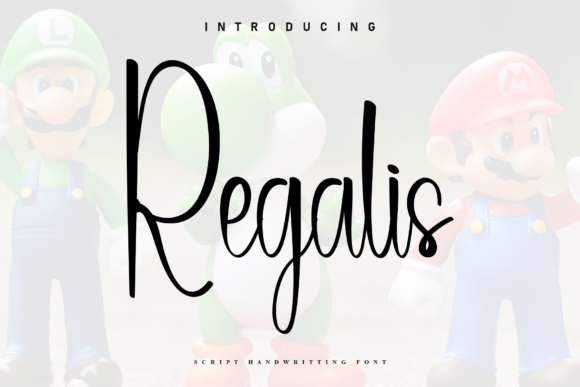
Regalis isn’t just another script font—it’s a design decision with quiet confidence. Its smooth, organic strokes and balanced imperfections convey sincerity without sacrificing clarity. Unlike overly decorative or rigid handwritten fonts, Regalis carries a sense of heartfelt perfection: not sterile precision, but considered craft. For professionals who rely on visual language to shape perception—entrepreneurs launching a brand, educators crafting learning materials, marketers building trust, or freelancers refining their portfolio—Regalis offers more than aesthetics. It offers alignment.
Why Regalis Fits Strategic Communication Goals
When your goal is to humanize a message—not just decorate it—the choice of typeface becomes part of your communication strategy. Regalis supports that intention because its rhythm feels conversational, not performative. Its letterforms breathe: generous spacing, gentle contrast between thick and thin strokes, and subtle variation in baseline alignment. These aren’t accidents—they’re design cues that signal approachability, authenticity, and care.
This matters most when credibility hinges on resonance rather than authority alone. A wellness coach using Regalis for an email header doesn’t just say “I’m friendly”—they demonstrate attentiveness through form. A small-batch candle brand applying Regalis to product labels doesn’t just “stand out”—it signals consistency between voice, values, and visual execution. In both cases, Regalis works because it’s anchored in purpose—not trend-chasing.
Where Regalis Delivers Measurable Value
Strategic use of Regalis shows up most clearly in three areas: branding cohesion, audience connection, and content hierarchy.
- Branding cohesion: When applied consistently across touchpoints—website headers, packaging, social bios, and printed collateral—Regalis reinforces a unified tone. Its warmth doesn’t compete with strong photography or minimalist layouts; instead, it softens edges without diluting impact. Think of it as tonal glue—not the star, but the subtle binder.
- Audience connection: Research in visual cognition shows that organic, hand-drawn qualities activate empathy pathways more readily than geometric sans-serifs in certain contexts—especially personal services, creative offerings, or emotionally resonant messaging. Regalis leverages this gently, avoiding caricature while retaining humanity.
- Content hierarchy: Because Regalis is highly legible at medium sizes (18–36pt), it functions well for short-form emphasis—captions, callouts, quotes, or subheadings—without overwhelming body text. Used sparingly and intentionally, it guides attention where it matters most: toward meaning, not ornament.
Practical Use Cases—and When to Pause
Regalis shines in specific, high-leverage applications—but misapplied, it can undermine clarity or professionalism. Here’s how experienced designers and communicators weigh those trade-offs:
Strong fits
- Invitations and announcements: Wedding suites, milestone celebrations, or launch invites benefit from Regalis’s warmth and tactility—especially when paired with quality paper stock or thoughtful digital rendering.
- Social media graphics: Short quotes, workshop titles, or community updates gain emotional weight when set in Regalis against clean backgrounds. Its natural flow suits square or vertical formats better than dense carousels.
- Branded merchandise: Tote bags, notebooks, or enamel pins with Regalis lettering feel handmade—not because they are, but because the typeface implies care in curation.
- Educational resources: Lesson headers, worksheet titles, or course module names gain approachability without sacrificing structure—valuable for adult learners or students needing reassurance alongside rigor.
Limited or risky uses
- Long-form body text: Regalis isn’t designed for paragraphs. Its expressive nature slows reading speed and increases cognitive load over time. Reserve it for headings, accents, or short labels—not essays, policies, or instructions.
- Low-resolution or small-scale digital interfaces: Below 16pt on screens—or in compressed email clients—it risks blurring or inconsistency across devices. Test rigorously before deployment.
- High-formality contexts without supporting tone: Legal disclaimers, financial disclosures, or technical documentation require neutrality first. Regalis may unintentionally signal informality where precision is expected.
How to Use Regalis With Intention—Not Habit
Intentional use starts before you open your design app. Ask yourself three questions:
- What outcome do I want this element to support? Is it to soften a hard sell? Invite reflection? Signal craftsmanship? If the answer is vague (“it looks nice”), pause. Regalis earns its place only when it serves a functional role in the user’s journey.
- Does it coexist well with my other type choices? Regalis pairs best with neutral, highly legible sans-serifs (e.g., Inter, Lato, or Montserrat) or restrained serifs (e.g., Merriweather, PT Serif). Avoid pairing it with other expressive scripts—competition dilutes impact.
- Is the context stable enough to carry its nuance? A handwritten font relies on consistent rendering. If your platform strips font features, substitutes fallbacks, or compresses assets, Regalis may degrade unpredictably. Prioritize environments where you control output fidelity—like branded PDFs, print, or modern web stacks with variable font support.
Also consider licensing. Regalis is often distributed under commercial-use licenses—but verify permissions for your specific use case (e.g., SaaS dashboards, embedded apps, or white-labeled tools). Missteps here don’t just risk legal exposure—they erode trust when users notice inconsistent or unlicensed typography across professional touchpoints.
Risks of Using Regalis Without Strategy
The biggest risk isn’t poor aesthetics—it’s misalignment. When Regalis appears without clear rationale, it reads as decoration, not design. That impression accumulates: a blog post title in Regalis, followed by mismatched social posts, then an inconsistent email signature, creates visual noise—not identity. Over time, audiences stop registering the warmth and start registering the inconsistency.
Another subtler risk is tone drift. Because Regalis leans gentle and personal, repeated use in transactional or urgent contexts (e.g., error messages, deadline reminders, policy updates) can unintentionally mute urgency or seriousness. The font doesn’t change the words—but it changes how seriously those words land.
Finally, accessibility considerations matter. While Regalis passes basic contrast checks at recommended sizes, its connected script forms reduce character distinctness for some readers—especially those with dyslexia or low vision. Always provide alternative text for image-based uses, and never rely solely on Regalis for critical information like contact details or safety instructions.
Long-Term Value: Beyond First Impressions
Regalis gains long-term value when treated as part of a broader design system—not a one-off flourish. Teams that document usage rules (e.g., “Regalis only for H2s and quote blocks,” “never smaller than 20px on web”) build consistency faster and scale more confidently. Freelancers who define Regalis’s role in their brand kit—alongside color palettes and voice guidelines—signal professionalism far beyond aesthetic taste.
For educators and creators, Regalis also supports learning retention. Studies suggest that moderate typographic variation—when used purposefully—can improve memory encoding for key concepts. A chapter title in Regalis, followed by structured body text, creates a visual anchor. But again: moderation is essential. One anchor helps navigation. Ten anchors create confusion.
Ultimately, Regalis rewards patience and planning. It won’t fix weak messaging or compensate for unclear strategy. But when chosen deliberately—as a tool aligned with goals, audience needs, and operational realities—it becomes part of what makes communication feel both human and effective.